Getting behind the wheel for the first time brings a huge rush of excitement. You picture the freedom of the open road. However, before you grab those keys, you must meet a specific state requirement.
Every new driver must complete a specific training program. The government wants every person on the road to understand the rules and risks. This makes the traffic law and substance abuse education TLSAE course a mandatory step. This training/course builds a solid foundation for a lifetime of good habits. It transforms a nervous beginner into an educated driver.
What exactly does the TLSAE Program Teach You?
The TLSAE course covers practical information that every driver needs daily. You learn the basic rules of the road and how to handle dangerous situations safely. More importantly, the lessons focus heavily on the effects of drug and alcohol use.
The Florida Department of Highway wants to make sure that new drivers fully grasp how dangerous impaired driving truly is. The state pursues a clear goal. They want to promote completely safe driving for everyone who uses the public roadways. You learn how to make smart choices even when faced with heavy peer pressure from your friends.
TLSAE Program Connects to the State Rules. How?
The Florida traffic law outlines exactly how you should behave on the roads. When you take the Florida TLSAE course, you study these exact laws. The department of highway safety built this program to align perfectly with the state rules. Understanding the rules of highway safety and motor vehicle operation matters greatly. This knowledge directly prepares you for the class e knowledge exam. You must pass that specific exam to earn your Florida driver’s license. By paying close attention, you absorb the exact information you will see on the final test.
Who Tracks Your Progress and Keeps the Records?
The safety and motor vehicles department automatically receives your results electronically. Once you complete a Florida program, the driving school sends the information straight to the database. This digital tracking helps first-time drivers avoid unnecessary delays. You skip the long lines and get straight to the exciting part of the day. The modern database removes the risk of losing your important documents before your appointment. You can trust the digital network to securely store your permanent driving record forever.
What Are the Steps to Complete This Journey?
Getting your official driver’s license involves a few specific steps. You must follow these steps in the exact correct order:
Find a state approved driving school that offers the correct program. All Class Drivers provides a fantastic platform for this purpose.
Register for the required education courses online using a simple application form.
Spend the required four hours studying the materials and completing the learning modules.
How This Course Prevents Future Accidents?
Young drivers face the highest risk of accidents during their first few months on the open road. Lack of experience causes many teens to panic when something unexpected happens. The training programs specifically target this lack of experience head on. By showing students how to handle common emergencies, this course builds real confidence. A confident driver makes better decisions under pressure.
They know exactly how far away to follow the car in front of them safely. They understand when it is safe to change lanes in heavy traffic.
Moreover, they also recognize the warning signs of aggressive drivers and know how to avoid them completely. This knowledge literally saves lives every single day on the highways across the state.
Why Do So Many People Choose All Class Drivers?
All Class Drivers stands out as a premier choice for several very specific reasons.
They offer a completely user-friendly digital platform that works beautifully on any device.
The lessons feature engaging videos and colorful graphics instead of boring text.
The instructors have years of real-world experience to share with eager students.
They report your completion directly to the state system instantly after you pass the final exam.
The customer support team always answers questions quickly and accurately whenever you need help today.
Take the Next Step Toward Your Independence Today!
Getting your license changes your life forever in the best way possible. You gain the freedom to travel and explore the world on your own terms. Do not let the required paperwork slow down your exciting journey.
Visit the All Class Drivers website right now to register for your mandatory training. Here, expert instructors provide everything you need to succeed on the road safely. Sign up today and start building the safe driving habits that will protect you for a lifetime. Take complete control of your own bright future by making the absolute smartest choice possible starting today.
Frequently Asked Questions
Q: How long does the training program actually take to finish?
A: The state mandates that the entire program must last exactly four hours. You can break this time up into smaller sessions to fit your busy schedule perfectly.
Q: Do students have to take the lessons in a classroom?
A: No, you have the option to complete the entire program entirely online. This allows you to study comfortably from your own home at your own personal pace.
Q: How old do you have to be to start studying?
A: You can begin the learning process the moment you turn fourteen and a half. This gives you plenty of time before applying for your actual official permit.
Q: What happens if someone fails the test at the end?
A: You do not need to panic if you fail the final test. Most platforms allow you to retake the final exam multiple times until you successfully pass.
Q: Does the certificate of completion ever expire or go bad?
A: The certificate remains valid for exactly one year after the completion date. You must get your official permit before that 1-year time period officially ends.
Driving skills provide people with access to the entire world while driving. New students face a big challenge before starting lessons. They find it difficult to decide between an automatic or a manual car. This choice shapes the whole experience significantly. Both options have absolutely great points and highly unique challenges. Understanding these specific differences helps people make a truly smart choice. Let’s look into details if you are also confused about the best fit for you.
Why Do Many Choose Automatic Transmission Vehicles?
Automatic vehicles remove a lot of stress because the machine shifts gears. Students need to focus only on steering and towards the direction they are headed. They simply have to work on the gas and brake pedals. This simplicity helps new students build confidence very quickly. You can learn in an automatic vehicle much faster. Students taking automatic driving lessons often pass their official tests sooner. Students spend less time mastering machinery and more time observing traffic patterns. This exact reason directs many inexperienced drivers to go for automatic transmission vehicles.
What Makes Driving Manual Transmission Vehicles Appealing?
Many drivers love the control that comes when they drive a manual car. The driver physically shifts the gears and directly controls the engine power. You press the clutch pedal to transition between different speeds smoothly. This action adds a deeply connected feeling to the driving experience. Driving enthusiasts prefer this connection and understand the vehicle better. When you learn in a manual, you unlock every vehicle.
How Do Daily Routes Affect Things?
Think about the daily commute and how driving conditions matter. Florida roads often feature heavy traffic every single morning and afternoon. A manual vehicle requires constant shifting. This repetitive motion tires out the left leg very quickly. An automatic vehicle handles this heavy traffic comfortably. Drivers simply sit back, press the brake, and easily roll forward. Conversely, manual cars shine brightly on open roads with zero traffic. Driving on a clear highway feels amazing as you pick the perfect gear.
Who Guides the Learning Process?
Driving teachers make a massive difference in how quickly students learn the rules. Good driving instructors understand students’ fears and build basic skills efficiently. Professional driving schools like All Class Drivers offer excellent support for everyone. In addition to teaching driving, safe vehicles are provided and the focus remains on keeping students completely protected. Instructors watch every move and correct mistakes gently during the lesson. Good teachers adapt to the student pace by giving nervous learners extra time.
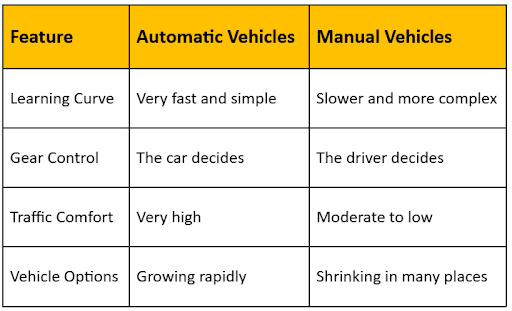
How Automatic and Manual Vehicles Compare Directly?
Let’s look at the direct differences between the two transmission types:
Why Do People Value Both Manual and Automatic Options?
Comparing automatic and manual helps clarify personal driving goals perfectly. Some people want pure transport to reach the store safely. Automatic vehicles serve these practical needs perfectly well every single day. Other people view driving as a fun and engaging mechanical hobby. They love the mechanical connection and enjoy the physical challenge greatly. Both distinct paths lead to a license and create highly safe drivers. You align the final choice with personal goals.
What Equipment Exists in Training Vehicles of All Class Drivers?
Top training vehicles include special tools to protect students during lessons. Cars from All Class Drivers have these safety features:
Dual brake pedals installed on the passenger side floorboard.
Additional rearview mirrors for the instructor to monitor traffic clearly.
Clear student driver decals attached to the exterior vehicle panels.
Modern safety features like active blind spot monitors.
High quality dashboard cameras for constant road recording.
Steps to Start the Learning Process
You can follow these clear steps to begin the training today:
Evaluate daily transportation needs and local traffic levels.
Consider personal comfort with physical multitasking.
Call local professionals to discuss available training packages.
Book an initial evaluation lesson to test the waters.
Practice consistently every single week.
Schedule the final road test confidently.
What Defines a Successful Educational Path?
Success looks different for everyone starting this path today. Your driving journey belongs only to you and nobody else. Some finish their training in weeks while others take many months. Speed does not matter in this educational process at all. Safety matters most when driving on busy public streets. A good driver foresees danger easily and stays calm under heavy pressure. The real skill shows in the physical decisions made behind the wheel. You must learn to drive with caution and complete awareness every day.
Take the Next Step Toward Your License!
Do not wait any longer to begin this exciting new chapter today. Get in touch with All Class Drivers today to book an initial training session. Experienced local professionals stand completely prepared to guide every single student successfully. Gain complete personal independence and easily hit the beautiful open road confidently.
Frequently Asked Questions
Q: Are automatic driving lessons cheaper than manual ones?
A: The lesson prices remain completely identical at most schools. However, students usually require fewer total hours to pass safely. This speed reduces the overall training cost significantly.
Q: Can manual drivers legally operate automatic vehicles on roads?
A: Yes, holding a manual license allows individuals to drive automatic cars legally everywhere. The reverse situation strictly requires an upgraded test in many different global regions.
Q: Do local driving schools provide the official test vehicle?
A: Yes, professional schools supply fully insured vehicles for the official road test. Students feel very comfortable driving the exact same car used during practice sessions.
Q: Are manual cars better for driving in bad weather?
A: Manual cars offer slightly better control in snow or heavy rain. The driver uses engine braking to slow down safely without pressing the brake pedal abruptly.
Q: Do new electric cars have a physical clutch pedal?
A: Electric models never feature a clutch system anywhere. They operate exactly like traditional automatics. Drivers simply press the accelerator to move and the brake pedal to stop.
Driving is a big decision. Its first novel experience will make you excited and maybe a little scared. This significant milestone brings freedom and new chances. Still, one big choice comes first. Should someone choose private driving lessons or join a driving school?
Both options can help. However, the best choice depends on the learner’s needs. The next step requires us to examine diverse options which we will compare on their distinct characteristics.
What Do Traditional Driving Schools Offer?
For driving lessons, a driving school is most traditionally deemed essential. These schools follow a set plan. They aim to teach skills step by step.
Most driving schools provide their students with two main options for driving instruction which include group lessons and individual lessons. The program teaches essential driving rules through traffic law education and safe driving practice instruction. At places like All Class Drivers, learners work with a certified instructor. This helps build trust. It also ensures proper driver training from the start.
Here’s what stands out with this option:
Clear lesson plans and structure
Focus on safe and legal driving
Access to trained and skilled instructors
Exposure to real road situations
This setup works well for new drivers. It builds a powerful base. Plus, it gives a steady and guided learning experience.
How Private Driving Lessons Work
Now, let’s look at private driving lessons. These are often one on one sessions. The pace depends on the learner. Some learners prefer this style. It feels more relaxed. There is room for personal learning, which many find helpful.
For example, a shy learner may feel nervous in group classes. In a private setting, they may open up more. As a result, they learn faster.
Private lessons often include:
Custom lesson plans based on skill level
More time behind the wheel
Direct feedback after each session
A calm and focused learning environment
In many cases, this setup suits busy people. It also works well for those who want quick progress.
Private vs Traditional Driving Schools: Key Differences That Matter
While both options teach the same goal, they differ in approach. Understanding these differences can help make a smart choice.
First, flexible scheduling plays a vital role. Private lessons often allow learners to pick times that suit them. On the other hand, driving schools offer fixed schedules.
Next, consider the pace. Traditional schools follow a set path. Meanwhile, private lessons move at the learner’s speed.
Also, the style of driver education can feel different. Group lessons may include shared tips and peer learning. In contrast, private lessons focus only on one learner.
Lastly, think about comfort. Some people enjoy social settings. Others prefer quiet, one on one time.
Private vs Traditional Driving Schools: Which Option Fits Your Learning Style?
Every learner is different. So, the best choice depends on how someone learns best. For instance, a student who likes clear steps may enjoy a structured driving school. They benefit from planned lessons and steady progress.
However, someone who wants more control may prefer private driving. They can focus on weak areas and learn at their own pace. Also, think about time. A busy work schedule may need flexible scheduling. In that case, private lessons may fit better. On the other hand, a beginner with no experience may gain more from full driver education programs.
Real Life Example to Consider
Consider two learners:
One learner joins a driving school. They attend classes twice a week. Over time, they gain confidence. They also learn defensive driving techniques in a safe way.
Another learner chooses private lessons. They focus only on city driving. Their instructor adjusts each session. As a result, they improve quickly in real traffic.
Both learners succeed. Yet their paths look quite different.
Finding the Right Balance
In some cases, learners mix both options. They start with a driving school for basics. Then, they switch to private driving for practice. This mix can work well. It combines structure with freedom. It also improves the overall learning experience.
When choosing, it helps to ask simple questions:
How much time is available each week?
What kind of learning environment feels best?
Whether one prefers group or one on one lessons?
How fast do they want to learn?
These answers can guide the right choice.
Take the Next Step with Confidence!
Choosing the right path for learning to drive makes a significant difference. A good plan builds skill, confidence, and safety.
At All Class Drivers, expert instructors guide each learner with care. Whether someone prefers structured lessons or personal learning, the goal stays the same. Safe and skilled driving.
If the journey to professional driving feels close, now is a wonderful time to begin. Contact us today to start your training and take that next step with confidence.
Frequently Asked Questions
1. What is the main difference between private and traditional driving schools?
Private lessons focus on one learner at a time with custom plans. Traditional driving schools follow a set program with group or fixed sessions for steady and guided learning.
2. Are private driving lessons better for beginners?
Private lessons can help beginners who need extra attention. However, many inexperienced drivers benefit from full driver education programs that cover basics, rules, and safe habits in detail.
3. Do driving schools offer flexible schedules?
Some driving schools offer limited flexible scheduling, but private lessons usually provide more choice. This helps learners plan sessions around work, school, or other daily tasks.
4. How do instructors help improve driving skills?
A certified instructor teaches key skills, corrects mistakes, and builds safe habits. They also guide learners through real road practice and teach important defensive driving techniques.
5. Can someone switch between both learning options?
Yes, many learners start with a driving school and later choose private driving sessions. This mix can improve skills faster and create a more balanced and effective learning experience.
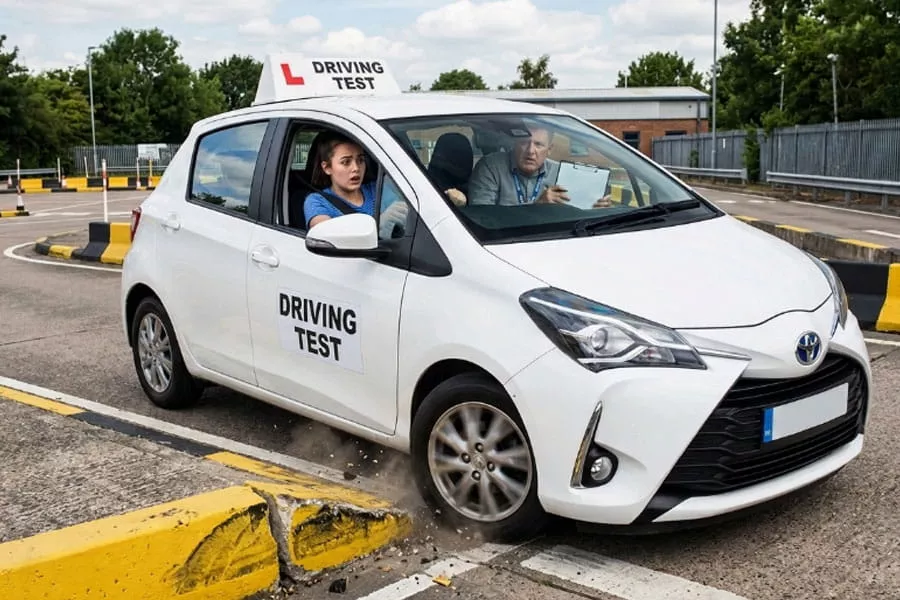
The driving test represents a major assessment point for students who take it. Students demonstrate calmness during practice sessions but experience test day anxiety. This transition creates a situation where students make minor mistakes.
The good news is that most of these slip ups become easy to correct after you learn the specific things to observe. This post analyzes the typical errors which people make and presents the best methods to avoid these mistakes.
Going Too Fast Without Realizing
It often starts without notice. Students often turn onto a wide road and pick up speed. Soon, they drive too fast. Test routes change often, so always watch for the speed limit signs. Do not rely on guesswork. Also, keep in mind that quiet streets need slower speeds.
In one case, a learner felt the road was empty and safe. Still, the car crossed the speed limit for just a few seconds. That was enough to lose points.
So, keep your pace steady. If unsure, slow down a bit and stay in control.
Not Stopping All the Way
This mistake shows up again and again. At stop signs, some students slow down but never fully stop. These are called rolling stops.
A proper stop means the car stands still. No movement at all. Count one second before you go. Also, take a good look both ways. Even if the road seems clear, the examiner needs to see safe habits. Treat every sign as a full stop. No shortcuts here.
Skipping Blind Spots Checks
Many learners trust mirrors too much. Mirrors help, but they miss key areas. That is why blind spots matter. Before you change lanes, take a quick look over your shoulder. It only takes a second. Yet it shows strong awareness.
Some students remember checking their mirrors but forget the shoulder check. That small miss can cost marks. Make it a habit. Mirror, then shoulder, then move.
Trouble Staying in the Right Lane
Lane control looks easy, but many learners fail at it. The car may drift, or the driver may pick the wrong lane. This leads to improper lane use. Keeping the car in the lane’s center works. It shouldn’t be allowed to lean left or right. Plan your moves early, especially before turns.
A few easy ways to stay on track:
Watch the lane lines at all times.
Signal before any lane shift.
Move early for turns.
Keep your steering smooth.
Small lane slips can quickly add up and make you lose points.
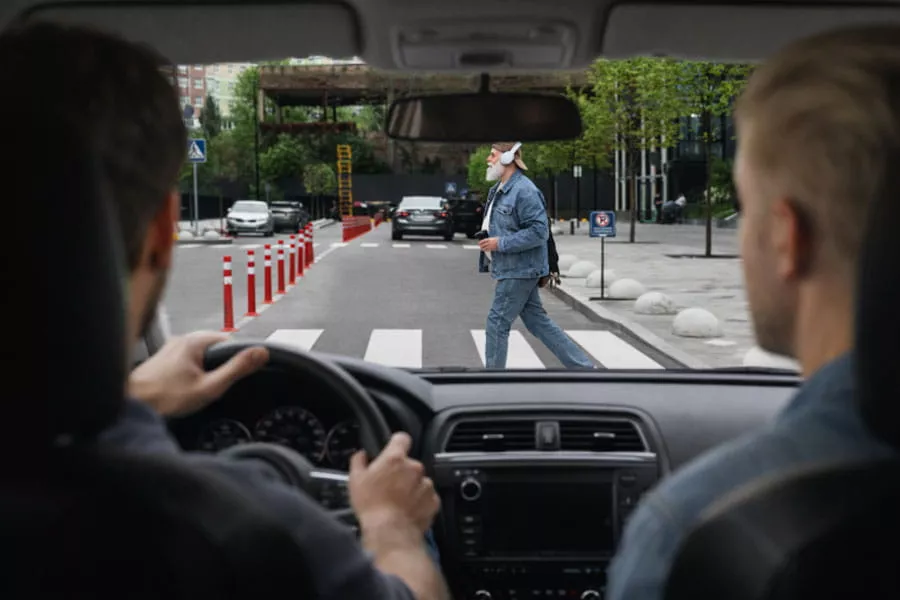
Missing Pedestrians at Crosswalks
It is easy to focus only on cars. Yet people on the road matter just as much. Many students forget about yielding to pedestrians. Always scan crosswalks and corners. If someone is near the road, slow down. Be ready to stop.
Even a short delay in giving way can count as a big mistake. The test looks for safe and kind driving habits. Stay alert. People can appear at any time.
Not Looking Around Enough
Driving is more than moving the car. It is about staying aware at all times. Some students forget to keep checking their space. Make a habit of checking your mirrors every few seconds. Do it before you slow down or turn.
Also, keep an eye on signs and signals. The more you see, the better you react. This helps your road test go smoother. Think of it as a steady scan, not a fixed stare.
Letting Nerves Take Over
Even well-prepared students feel stress. That is normal. The trouble starts when nerves take control. A small mistake may happen. That does not mean the test is over. Stay calm and focus on what comes next.
Examiners do not expect perfect driving. They want safe choices and steady control. With the right practice, calm driving becomes natural. That is what training at All Class Drivers aims to build before test day.
Let’s Build Skills That Last!
Passing a driving test is not just about one day. It is about forming safe habits that stay with you. At All Class Drivers, lessons focus on real road skills that help students avoid common mistakes with ease.
From smooth stops at stop signs to proper checks of blind spots, each session builds strong habits. Step by step, students learn to stay calm, aware, and in control. Book a lesson and move closer to passing with quiet confidence.
FAQs
1. What is the most common reason students fail a road test?
Many students fail due to rolling stops, weak observation, and missed blind spots checks. These small errors add up and cause them to lose points during the test.
2. How can speed affect the driving test result?
Going above the speed limit or driving too fast leads to quick penalties. Examiners expect steady and safe speed control at all times, even on empty roads.
3. Why is checking mirrors so important during the test?
Regular checking your mirrors shows you are aware of traffic around you. It helps you make safe moves and avoid sudden actions during the test.
4. What should be done at stop signs during the test?
Always make a complete stop at stop signs. Avoid rolling stops and pause briefly while checking both directions before moving forward again.
5. How can students avoid losing points for lane mistakes?
Stay centered and avoid improper lane use. Plan turns early, signal on time, and follow lane lines to prevent errors and reduce the chance to lose marks.
Your driver’s test marks a big milestone. You feel excited. However, you may also feel nervous. That feeling is normal. Luckily, correct preparation is a big deal.
Many students’ failures can be attributed to their failure to notice trivial details. Others panic under pressure. As such, you require an outline. This teacher-authenticated checklist will make you focused and sure.
Let’s break it down step by step.
1. Review the Driver’s Manual Carefully
First, revisit your state driver’s manual. Do not skim it. Instead, review key rules carefully.
Focus on speed limits, right-of-way rules, and road signs. Additionally, study parking rules and school zone laws. These areas often cause mistakes.
Even if you passed the written test, refresh your memory. Rules fade over time. Therefore, regular review strengthens recall during the exam.
2. Practice Core Driving Skills Daily
Practice builds confidence. However, practice must be intentional.
Work on these essential skills:
Smooth acceleration and braking
Complete stops at stop signs
Proper mirror checks
Blind spot checks
Safe lane changes
Parallel parking
Three-point turns
Moreover, practice in different traffic conditions. Drive during busy hours. Drive in light traffic. This variety prepares you for anything. Consistency matters. Short, daily sessions work better than long, random drives.
3. Master Parallel Parking
Parallel parking often creates stress. However, it becomes simple with repetition. Use cones or markers to simulate cars: practice spacing and steering control. Move slowly and steadily. Do not rush.
Additionally, learn reference points in your vehicle. They help you judge distance. As a result, you park with precision.
4. Eliminate Common Mistakes
Small mistakes cause many failures. Therefore, fix them early.
Avoid these common errors:
Rolling stops
Forgetting blind spot checks
Driving too slowly
Speeding slightly over the limit
Improper hand positioning
Ask someone to observe your driving. Honest feedback helps. Furthermore, recording practice sessions can reveal habits you miss.
5. Take a Mock Road Test
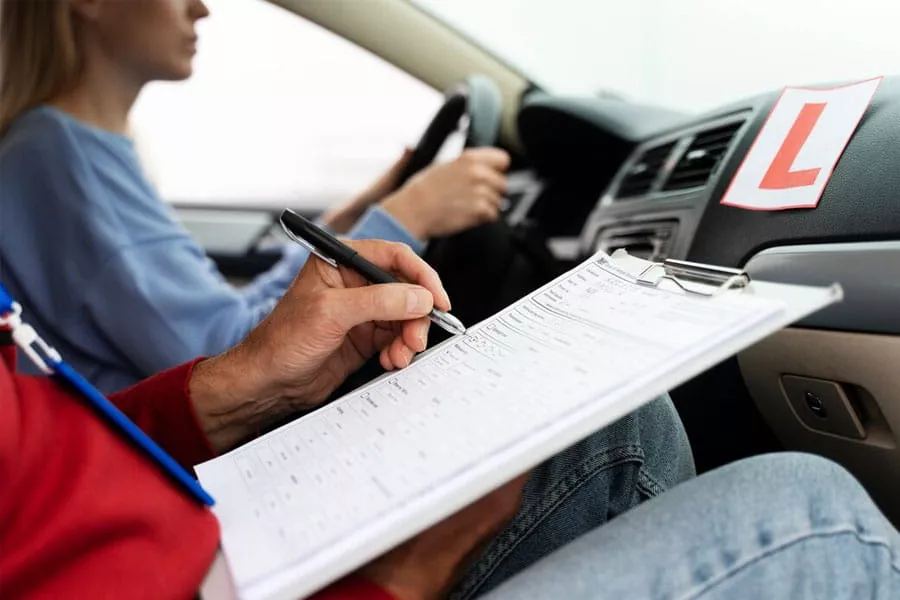
A mock test reduces anxiety. It prepares you for real pressure. Ask a licensed adult or instructor to act as the examiner. Follow directions exactly as you would on test day. Avoid casual conversation.
Treat it seriously. This approach builds mental readiness. Consequently, the real exam feels familiar.
Midway through preparation, many learners seek structured support. Schools like All Class Drivers guide students through realistic test simulations. Their mission is simple: to provide a premium, effective driver education and testing experience. That focus helps students feel prepared and calm.
6. Know the Test Day Requirements
Preparation includes logistics. Therefore, confirm all documents in advance.
Bring:
Your learner’s permit
Required identification
Completed practice log
Automobile insurance and registration.
Also, check the car you’ll be driving. Mirrors, lights, signals, and check brakes. Make sure everything operates correctly.
On failure to pass an inspection, examiners can cancel the test. Thus, do a final verification the previous night.
7. Enhance Offensive Driving
Examiners seek enlightenment. They want safe drivers, not perfect drivers. Keep a safe following distance. Scan intersections early. Check mirrors every few seconds. Anticipate pedestrian movement.
Furthermore, signal early and clearly. Maintain steady speed. Standardizing control is an impressive attribute. Defensive driving demonstrates wisdom on the road. It therefore increases your chances of passing.
8. Prepare Mentally
Success does not require just skills. Mindset matters equally. Sleep well the night before. Eat a light meal. Reach early enough to avoid being in a hurry.
When taking the test, breathe slowly. Pay attention to the instructions. In the event of any little slip, keep calm. Do not dwell on it.
Questioners are conscious of minor mistakes. But bigger mistakes are made when one panics. As such, pay attention to the current moment.
9. Dress and Professional Dressing.
Perception is affected by your attitude. Wear well and easily. Distractors such as loud music should be avoided. Greeting the examiner politely. Meet instructions. Be respectful in communication.
Responsibility is expressed through professional behavior. In addition, it creates a good atmosphere at the beginning.
10. Final Practice the Day Before
Keep practicing the day before the test. Review parking and turns briefly. However, avoid overdriving. Too much practice may increase stress. Instead, focus on confidence. Visualize success. Picture smooth lane changes and clean stops. Confidence grows when preparation meets calm thinking.
Note: Before leaving home, confirm:
Documents packed
Vehicle inspected
Fuel level adequate
Keep Your Phone silent
Appointment time verified
Arrive at least 15 minutes early. This buffer reduces pressure.
Why Structured Preparation Works
Random practice creates gaps. Structured preparation closes them. A checklist has the advantage of tracking progress. You know what to improve. Also, you develop lifelong habits.
Many students have underestimated professional guidance. Nonetheless, professional teaching perfects the skills and enhances self-confidence. The programs, such as All Class Drivers, are aimed at skills development and practical preparation. They still have a mission of offering an effective, simple, and premium driver education and testing experience.
With structured practice and the right guidance from All Class Drivers, you can approach test day with confidence and drive toward success.